Understanding what procedural and structural issues stand in the way of good governance
Why do good bills fail? Why do some bipartisan issues never see the light of day? Why are well-conceived solutions so hard to implement? And why is it so difficult to understand what is happening in our government?
We at VaOurWay decided to examine these important questions to understand exactly what procedural and structural issues stand in the way of our ever-growing concerns. Many people still lack access to basic services like healthcare, decent education, and broadband. Unemployment rates soar while Virginians remain uncertain about our economic outlook, and our energy system needs more modernity, diversity, and security. Unsurprisingly, Virginians are looking to our leadership for answers. By pinpointing the various hurdles that face our state government, we aim to encourage a more efficient, more transparent, and more just Virginia legislature capable of serving its people.
Legislative Procedures
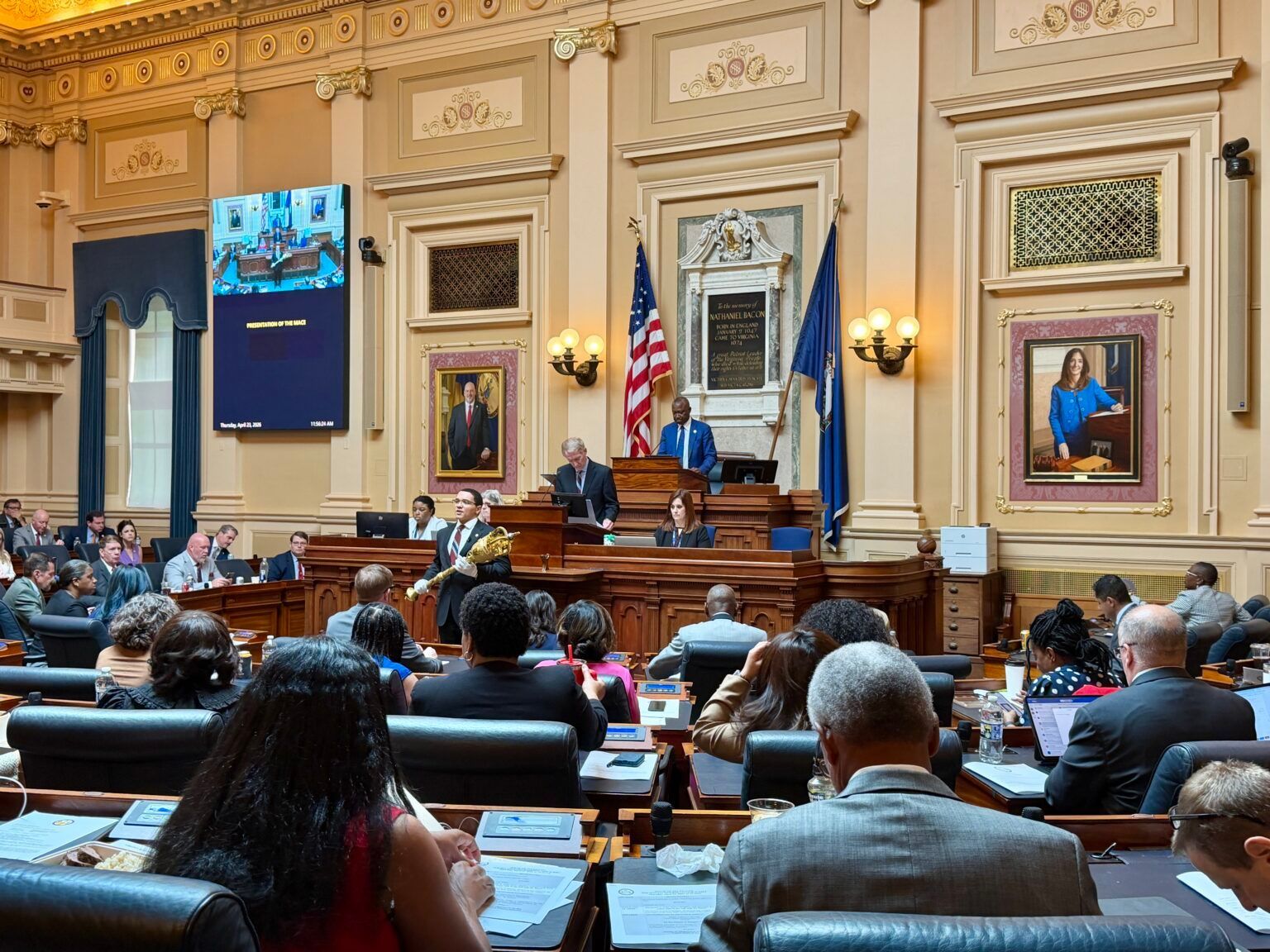
Despite a number of fixes to the General Assembly’s structure suggested over the years, very little has changed. The first concern, and potentially most impactful, is the duration of the legislative session itself. In even-numbered years, the session is held for 60 days. In odd-numbered years, the session lasts only 30 days. While this is often subject to extensions, it is far too short for legislators to fairly consider the thousands of bills introduced annually. Along those same lines, it makes it very difficult for citizens to remain informed about important legislative changes.
Second, in order to accommodate this abbreviated timeline, Virginia utilizes a robust system of committees and subcommittees that tend to do the bulk of the legislative analysis and decision-making. This is so every lawmaker need not be privy to each and every bill. There are several reasons why this system teeters on simply undemocratic.
The first is the role of committee chairs. Every chair has the authority to dictate the bills that are placed on a committee docket. Thus, specific legislators are able to give preference to certain bills and simply refuse to hear others. This practice has prevented bills from receiving the benefit of full consideration and shields legislators from uncomfortable or politically damaging decisions.
Subcommittees, groups of only 6-10 legislators, can have an even more authoritative role. With a committee that small, it is much more likely that individual wills win out. Moreover, on the House side, if a bill dies in subcommittee, it isn’t even taken up at the committee level. The result is centrist-oriented legislation that could have broad support from a full chamber may fail because of the decision of a few.
A simple fix would be to extend the session comparable to other states. By doing so, Legislators would not have to rely so heavily on committee recommendations if there were more time to make well-informed decisions. There are some issues with a longer legislative session, in particular, the cost of having full-time legislators. It is also more difficult to track a year-round session. However, the General Assembly could explore moving up the filing deadline for bills so stakeholders would have more time to get a grasp on potential legislation.
Another remedy is to broadcast subcommittee hearings online. While the General Assembly did recently begin streaming full committee hearings, crucial decisions are continually made at the subcommittee level. Therefore, recording these meetings for public view is not only logical, but a critical step towards a more transparent and accessible legislature.
Lobbying
Virginia has a forceful lobbying presence. This is in large part due to the brevity of the session and the wide variety of issues legislators are expected to consider. At its core, lobbying can be a very useful practice. Lobbyists represent a wide variety of interests and can help educate legislators on the nuance of specific issues while professionally advocating for causes and clients.
However, fair lobbying requires transparency and equality of access. Lobbyists often conjure images of smoke-filled backrooms and under-the-table dealings because there are insufficient regulations surrounding lobbying. Virginia is no exception. In the Commonwealth, lobbyists must register with the Virginia Conflicts of Interest and Ethics Advisory Council and disclose what they plan to lobby on. Strategically, lobbyists are very vague with these disclosures, thereby obfuscating what should be a transparent process. Additionally, the Ethics Council has no mechanism to audit the disclosures and thus has little power to enforce them.
Virginia law also generates a great deal of ambiguity around the practice of lobbying itself. The definition is much narrower than that of the IRS and only includes the direct interaction with the legislator or the executive branch official for the purpose of advocating for a specific legislative agenda, which leaves a great deal of leeway. For instance, former Virginia House Speaker Bill Howell was hired by a large lobbying firm following his retirement from politics. He was unable to lobby his first year at the firm because of a Virginia law, but the weak definition of lobbying allowed him to influence his former colleagues.
It is not uncommon to see very close relationships between lobbyists and legislators in Virginia. And lobbyists’ influence is often enhanced when campaign contributions are involved. At its worst, lobbyists are writing bills themselves for legislators to submit. More regulation on lobbying is needed to ensure Virginia is a state of fair and open advocacy.
Campaign Finance
Campaign finance reform has been proposed to the legislature many times over the years, but ultimately has never passed. Unfortunately, it is an issue of self-regulation, which is often difficult for leaders to do. Virginia is one of only four states without any limitations on campaign contributions. There is also no cap on gifts to elected officials as long as anything over $50 is disclosed. This requirement does not extend to immediate family members.
Large corporate contributions results in a tremendous influence in the General Assembly. Altria and Dominion Energy are Virginia’s largest campaign contributors.
Additionally, there are very few restrictions on how campaign money can be spent. It is not uncommon for our government officials to charge campaigns or political action committees for personal expenses.
The problem extends beyond our Delegates, State Senators, and Governor. The Virginia Attorney General, who is tasked with independent advocacy for consumers, is an elected position. He or she will constantly be under political pressure because of these contributions, but often cannot win an election without them.
Virginia lacks an independent ethics commission with the authority to audit disclosure documents and enforce the few laws that currently exist. Ultimately, unlimited campaign contributions result in a conflict of interest. Our elected officials should be beholden to all citizens and the views they represent. The growing money in Virginia politics has only made loud voices louder.
SCC Oversight Issues
The Virginia State Corporation Commission (SCC) is a little-known entity with a big job. It is tasked with the regulation of public utilities, insurance, state-chartered financial institutions, securities, retail franchising, and railroads. This is where a lot of Virginia’s important economic oversight happens. However, its constitutional structure is problematic. It is, and should be, an independent agency, but receives its power and mandates from the General Assembly.
Its independence insulates it from the influence of campaign contributions, but our legislators impose more will on the SCC than was intended. SCC judges are only allowed to make decisions the General Assembly permits them to make and often has its hands tied by legislatively mandated considerations.
Decisions pertaining to public utilities are particularly prone to legislative distortion. The omnibus energy bill from 2018, SB 966, had the effect of predetermining the SCC’s findings in certain types of cases. The legislature also negotiated a multi-year rate freeze for Dominion, which bypasses the SCC’s task of utility rate setting.
The SCC was intended to be an independent regulator and arbiter for some of Virginia’s most influential businesses. Excessive involvement from the legislature has only served to distort its mission.
Concluding Remarks
As Virginians seek solutions to a growing list of concerns, the need for transparency, efficacy, and equity in our state legislature is more important than ever. An examination of the structural and procedural issues present in Virginia reveals a multitude of remedies. By making the Regular Session more accessible, broadcasting subcommittee hearings, tamping down on loose lobbying practices, reigning in the influence of money in politics, and establishing strong, independent criteria for the SCC, we can begin to build the kind of just and effective government the people of this Commonwealth deserve.