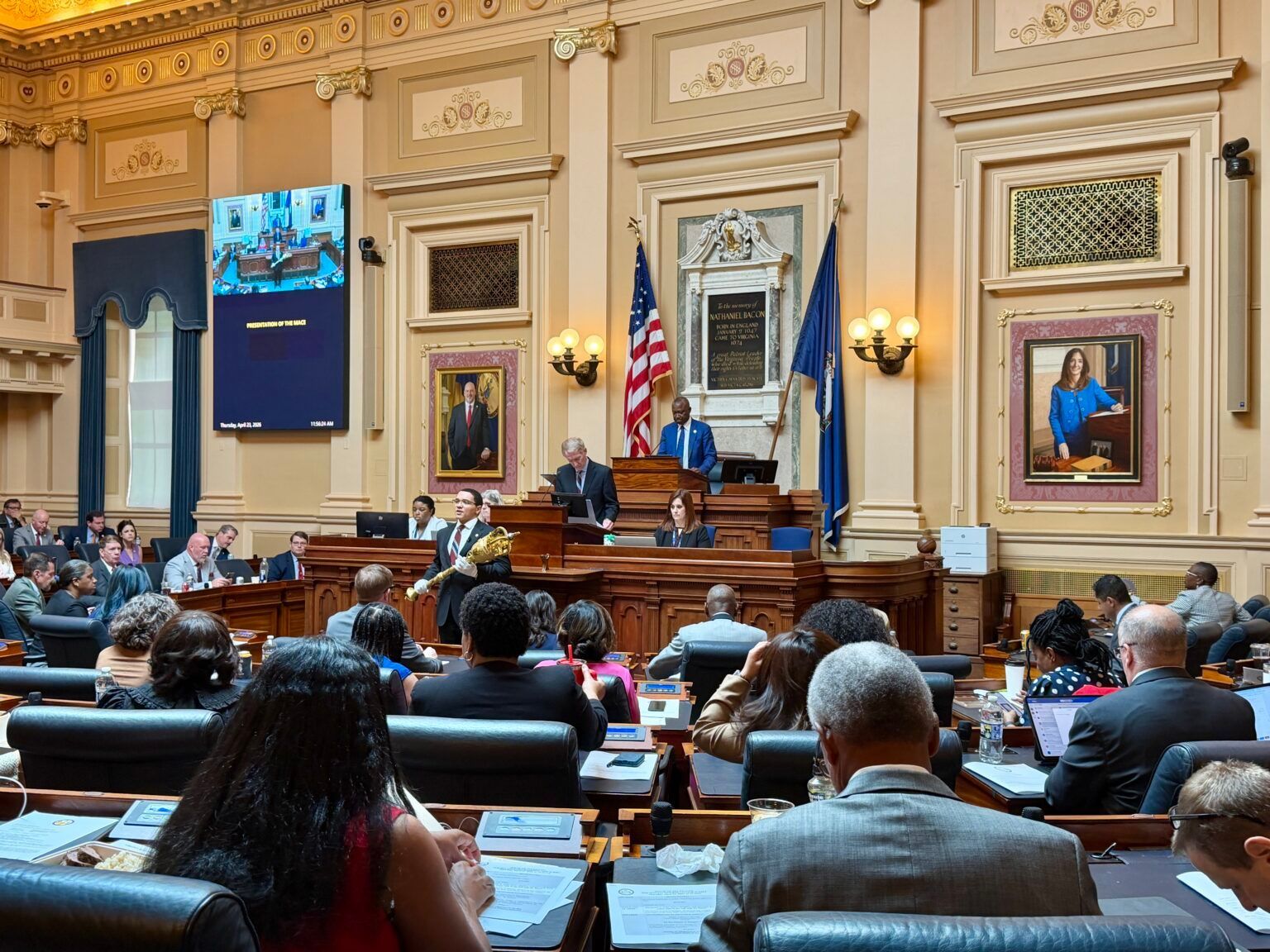
Virginia’s General Assembly wrapped up a brief special session this past Tuesday. The session, which was limited in scope, brought legislators to Richmond to decide how to allocate $4.3 billion in funds granted to the state via the American Rescue Plan and to fill judicial vacancies. The American Rescue Plan, a $1.9 trillion economic stimulus package passed by Congress and signed into law by the President in March, aims to support economic recovery throughout the nation after a year of uncertainty brought about by the COVID-19 pandemic. Virginia became eligible to begin spending its allocation of ARP funds at the beginning of July. 


Legislators decided to spend $3.4 billion of the federal aid this year, leaving the remaining $1.1 billion in funds for spending in the next biennial budget that’s set to be shaped during the 2022 regular session. The additional funds may also be used for efforts to mitigate COVID-19 as Virginia begins to see a surge of cases brought on by the Delta variant. 


On the other hand, the $3.4 billion to be spent during this fiscal year will be funding a number of notable projects.

With Virginian children heading back to schools this fall, ventilation and air quality will be crucial to keeping classrooms healthy, especially considering that COVID-19 is an airborne virus. The legislature moved to allocate $250 million to complete planned ventilation and air quality upgrades in schools throughout the state. The $250 million is to be matched by localities, for a total of $500 million in investments. 


With many parts of the state — especially rural areas — lacking reliable access to the internet, universal broadband coverage has been a priority of the General Assembly for years. In 2018, Governor Ralph Northam set a goal to achieve universal broadband coverage in Virginia by 2028. But with the General Assembly approving $222 million in funds to accelerate this goal, Virginians can now expect internet access in every part of the state by 2024, four years earlier than originally planned. 


In the wake of five mental health institutions halting admissions on account of staffing shortages earlier this summer, the General Assembly allocated $354 million to be used for compensating staff at behavioral health institutions throughout the state. A portion of these funds will also be used to compensate state law enforcement officers. This allocation, however, is contingent upon further approval by the General Assembly during the 2022 regular session. 


With the state’s unemployment fund practically empty after a year of surging unemployment claims caused by the pandemic, $862 million will be used to replenish the fund. These funds will help small businesses avoid a steep tax increase next year that would have contributed to refilling the fund’s coffers. 


Aside from allocating ARP funds, the General Assembly also filled eight judicial vacancies. Earlier this year, the legislature voted to allow the right of appeal in all criminal and civil cases. Prior to this action, Virginia was the only state in the country that didn’t guarantee this right. Since the volume of cases the Court of Appeals will hear is certain to increase, the composition of the state’s second-highest court will grow from 11 judges to 17. Judges were appointed to fill these new roles, and two other existing vacancies were also filled. The new appeals court judges include Dominique A. Callins, Doris Henderson Causey, Vernida R. Chaney, Frank Friedman, Junius P. Fulton, Lisa M. Lorish, Daniel E. Ortiz, and Stuart A. Raphael. 


The General Assembly is scheduled to next meet on January 12, 2022, when the 2022 regular session will begin.

By VOW Ops January 21, 2026
The second year of results from Virginia’s recently established Quality Establishment and Improvement System (VQB5) for early childhood education found that 99% of childcare providers receiving state funding meet or exceed quality expectations. As of early December 2025, over 154,000 views have been recorded on the system’s website since its October 2024 debut, revealing the many parents and families who appreciate the information that VQB5 offers them. None of these wonderful results would even be available to admire without the support and success we had in passing HB 1012 and SB 578 back in 2020! The data focuses on classroom interactions between children and caregivers and notes how said interactions encourage kids to express themselves at a young age. The state has also enacted categories of excellence for providers who score in the top 10%, exceed quality expectations, or even show significant improvement from an evaluation the year before. On top of that, a new data system called VAConnects helps integrate information on students over the years to track their learning progress. The Department of Education wishes to sustain the program and has requested $735,000 to do so. Overall, Virginia is serving as a model for other states to use in establishing best practices for their early childhood programs. Read more here .
By VOW Ops January 21, 2026
An August survey reveals that large majorities of Virginians want state lawmakers to address the rising cost of housing. The survey was conducted by Housing Opportunities Made Equal of Virginia and Freedom Virginia. More than 8 in 10 Virginians said the General Assembly needs to act. More than 3 in 4 Virginians want lawmakers to prevent landlords from raising rents each year by more than 7%. Many Virginians also supported the idea of the state incentivizing localities to build more housing and providing developers with an ability to appeal rejected housing projects. Many proposals that were made to address all these public concerns were struck down during the 2025 legislative session. One of the main reasons why all the mentioned proposals failed to pass the General Assembly is because of the large influence the local government lobbies have in Richmond in protecting what little authority they are granted by the state. However, 6 in 10 Virginians indicated that they are more concerned with providing more housing than protecting local government authority. Read more here.
By VOW Ops December 19, 2025
Governor-elect Spanberger has released details on how her administration will work with the General Assembly to address affordability issues for Virginians regarding health care, energy, and housing. Democrats in the General Assembly argue the proposals are needed to mitigate the effects of President Trump’s tariff policies and reduction of the Affordable Care Act (ACA) subsidies. Some of the solutions being proposed are legislation from the previous session that were vetoed by Republican Governor Glenn Youngkin. In health care, Spanberger and Virginia Democrats will tackle pharmacy benefit managers’ ability to compel patients toward using affiliated-only pharmacies. The incoming administration also wants to limit the number of times insurance companies can request approvals from patients receiving certain cancer cares and medicines for chronic conditions. Democrats are also reviving legislation that would prohibit insurance companies from charging tobacco smokers higher premiums. Further, Spanberger supports implementing a pilot program to help Virginians who will face unaffordable insurance premiums resulting from the expiration of the ACA enhanced tax credits. In energy, Spanberger called to make it easier for Virginians to utilize small-scale solar panels which don’t require hard labor to install. She also wants the previously vetoed legislation that would set energy storage standards for utility companies brought back to her desk (Governor Youngkin vetoed it because of his belief that the Virginia Clean Economy Act associated with it was ineffective). In housing, Spanberger and Democrats are reviving legislation from 2025 that would extend the grace period tenants have before being evicted for missing rent payments. They are also proposing changes that would give local governments priority in acquiring affordable multi-family units supported by tax credits when the owner wants to sell or convert them. Further, Democrats are reintroducing a bill which would allow all localities to change their zoning ordinances to create dense and affordable housing (currently, only the counties of Albemarle and Loudoun and the cities of Alexandria, Charlottesville, and Fairfax are granted such provisions). Read more here.
Show More