Virginia lawmakers complete the bulk of their work in either 45 or 60 days, depending on the year, give or take a special session or two. As with any political system, there’s bound to be disagreement about the value of a lawmaker's work, but we can all agree that lawmakers do indeed work, and are compensated for doing so. 


So how are Virginia lawmakers compensated, and how much is their legislative staff paid? And how does lawmaker pay stack up relative to other comparable states? 


Members of the Virginia House of Delegates receive an annual salary of $17,640, while their Senate counterparts receive an $18,000 annual salary. This has been the case for roughly 30 years now; lawmakers have not received a pay raise since 1988, when the annual salary for both delegates and senators was raised from $11,000 per year to $18,000 per year. The House
voted to lower its salary by 2% to the current sum in 1992, the same year state employees received a 2% pay cut. 


An annual salary is not the only way Virginia lawmakers are compensated, however. During legislative sessions, lawmakers receive
a daily payment intended to cover the costs of spending time in Richmond, including meals, lodging, and other ordinary expenses. This payment, known as a per diem, totals $211 each day. Members can expect a total of $12,660 in per diem payments during 60-day sessions, and $9,495 in per diem payments during 45-day sessions. The per diem is determined based on U.S. General Services Administration calculations indicating how much it costs to travel in Richmond for a day. 


Since some lawmakers are able to sleep under their own roofs during session, rules regarding per diems change based on where lawmakers live. For delegates who live more than 50 miles from Richmond, per diems are non-taxable, the logic being that those closer to Richmond don’t need to have certain expenses covered. Senators residing near Richmond receive a per diem of just $74. No receipts are required for lawmakers to receive this per diem.


Lawmakers are also compensated for official meetings attended outside of general and special sessions. Lawmakers are paid $300 a day to attend these meetings; if two or more meetings occur in one day, the rate increases to $400 a day. Dozens of these meetings occur each year; they can be tracked by viewing the
General Assembly’s meeting calendar.


It’s likely that very little would happen at the General Assembly if lawmakers didn’t have paid staff to support their work. Thus, the Virginia state budget includes
compensation for legislative staffers. Each member of the House is provided with $44,125 each year to compensate legislative aids, while members of the Senate are provided $49,641 to compensate their legislative aids. Additionally, all members of the General Assembly receive $1,250 each calendar month in order to cover office expenses and supplies.


The
National Conference of State Legislatures classifies state legislative session lengths as either full-time, part-time, or hybrid. Compared to other states, Virginia is considered to have a hybrid legislature, meaning lawmakers typically spend about two-thirds of the year fulfilling legislative duties. According to the NCSL, the average pay for lawmakers in hybrid states is $41,110, suggesting Virginia lawmakers are underpaid for their work. 


Lawmakers have the power to alter their salary, and
have attempted to do so in the past. But the notion of lawmakers voting to give themselves a pay raise doesn’t always make for good press, meaning lawmakers are unlikely to see higher pay anytime soon.
By VOW Ops April 23, 2026
Manufactured homes are constructed in a factory and then transported to a land plot instead of traditional homes which are built on site. Despite the cost-savings constructors and prospective homeowners earn from manufactured homes, outdated stigma prevents them from being located anywhere other than agricultural zones. As part of her Affordability Agenda, Governor Spanberger has signed legislation which will expand where manufactured homes can be located. Under HB 655 and SB 346, starting July 1st Manufactured homes can now be located within any residential zone intended for traditional homes (with exceptions for historic districts). Further, localities will not be permitted to place different rules or any additional restrictions on manufactured homes that would not be imposed on single-family homes. Both bills passed the General Assembly with near-unanimous support. Executive Director of the Virginia Manufactured and Modular Housing Association Randy Grumbine says the new laws “could be very significant” in removing barriers that have been in place for decades. In 2020, a single-section manufactured home cost 35% the price of a similar-sized traditional home. Virginians have been facing affordability challenges when looking for housing – especially over the last several years – and they continue to experience a housing shortage which only exacerbates the problem. Del. Maldonado and Sen. VanValkenburg have noted that the strong bipartisan support they received for their respective bills is because Virginia’s housing crisis affects everyone regardless of partisan affiliation. Beyond the expansion of locations for manufactured homes, Governor Spanberger also signed HB 1227, which increases the amount of state funding toward affordable housing. She also signed HB 4, which gives localities the authority to require property owners to give the local government or developer the first chance to purchase property to build affordable housing. You can read the full article here for more details.
By VOW Ops April 23, 2026
[Virginia Mercury] Virginia Lawmakers Recess Special Session Without Budget Deal
By VOW Ops March 19, 2026
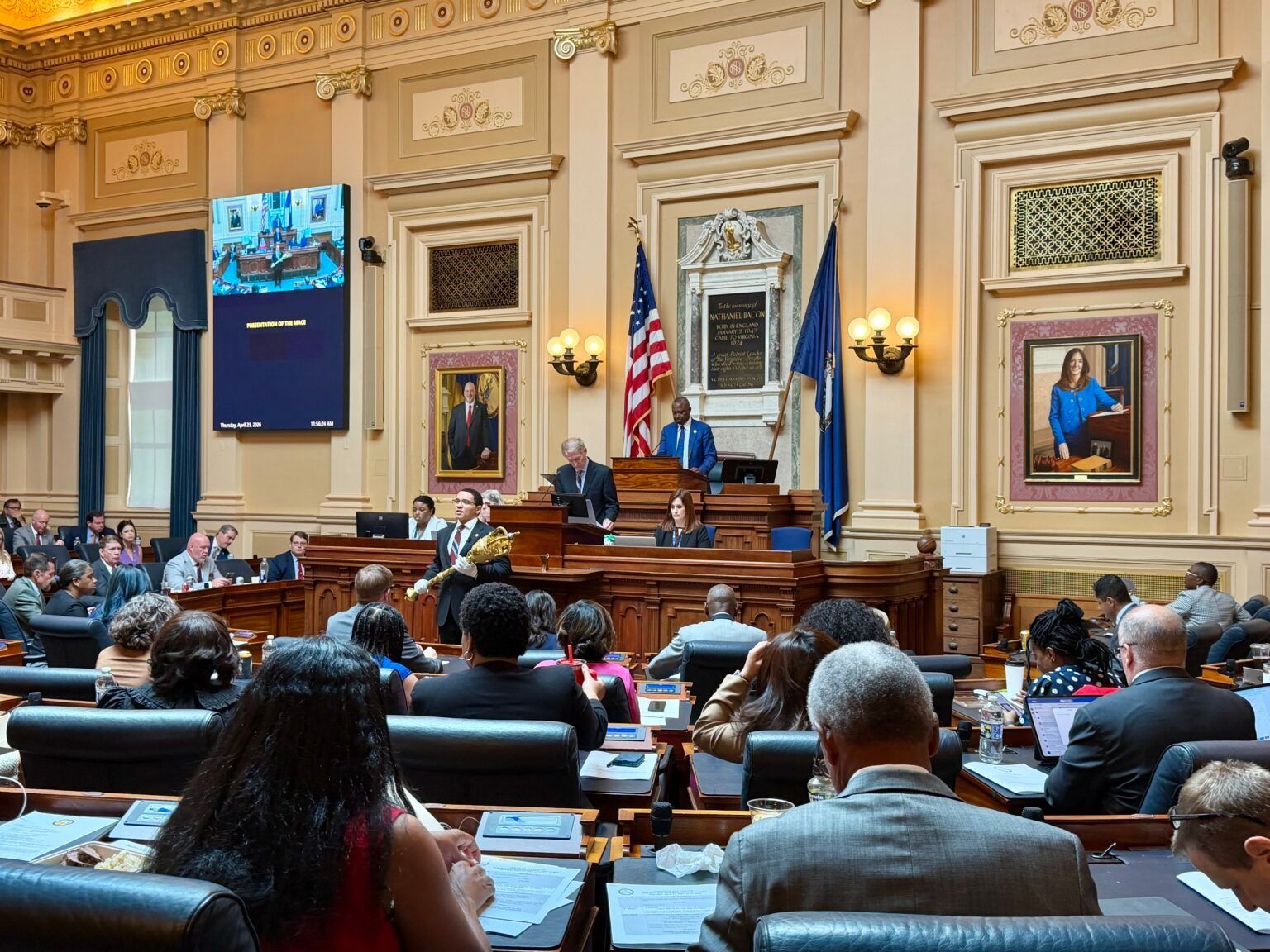
Virginia’s growing data center economy was the center of attention for this year’s General Assembly session, with lawmakers balancing the industry’s benefits against its costs to communities. Of the many bills that were proposed to regulate data centers, some passed both the House and Senate and now head to Governor Spanberger’s desk for either her signature or veto. SB 253 (Sen. Louise Lucas, D-Portsmouth) would extend a program Dominion Energy and Appalachian Power Company offer low-income customers to reduce their monthly energy bills by weatherproofing their houses. The bill also gives the State Corporation Commission (SCC) the liberty to determine if more of the cost of generating electricity for data centers should fall onto them and large manufacturers instead of homeowners. SB 553 (Sen. Srinivasan, D-Loudoun) would direct water utilities to provide monthly or quarterly reports on how much water they are providing to data centers. Currently, data centers can withhold their water usage as an industry secret. SB 94 (Sen. Roem, D-Manassas) and HB 153 (Del. Thomas, D-Prince William) would require applicants who request localities to rezone for “high-load users” to submit site assessment reports. Localities would then be able to use the information from said reports to determine if the application conforms with their zoning requirements. HB 507 (Del. McAuliff, D-Loudoun) would mandate the Department of Environmental Quality to deny air permits for data center generators after July 2026 unless they meet stricter environmental regulations. Currently, data centers are allowed limited use of backup generators that run on diesel fuel, which have resulted in next-door neighbors complaining of noxious fumes spilling into their communities. HB 323 (Del. Sullivan, D-Fairfax) directs the Department of Energy to study how to best utilize waste heat generated by data centers to meet heating demands from neighboring buildings. One of the most robust debates involving data centers revolved around the sales tax exemption given to them on their server equipment and software. The Senate budget bill would end the exemption, hoping to recover the $1.6 billion they argue the state loses annually as a result. The House budget bill would keep the exemption but stipulate additional requirements for data centers to remain in compliance with receiving the exemption. The data center industry has rebutted the proposals to end the tax exemption, arguing that it has brought billions of dollars in investment into Virginia. Furthermore, the issue does not fall along clear, partisan lines, with both Democrats and Republicans arguing for against ending the exemption. The issue has ultimately ground Virginia’s budget approval process to a halt, with neither chamber coming to a consensus on the state’s biennial budget. Governor Spanberger has called for a special session beginning April 23rd so that the General Assembly can resolve the dispute. You can read the full article here for more details.
Show More