General Assembly To Consider American Rescue Plan Allocations During Special Session

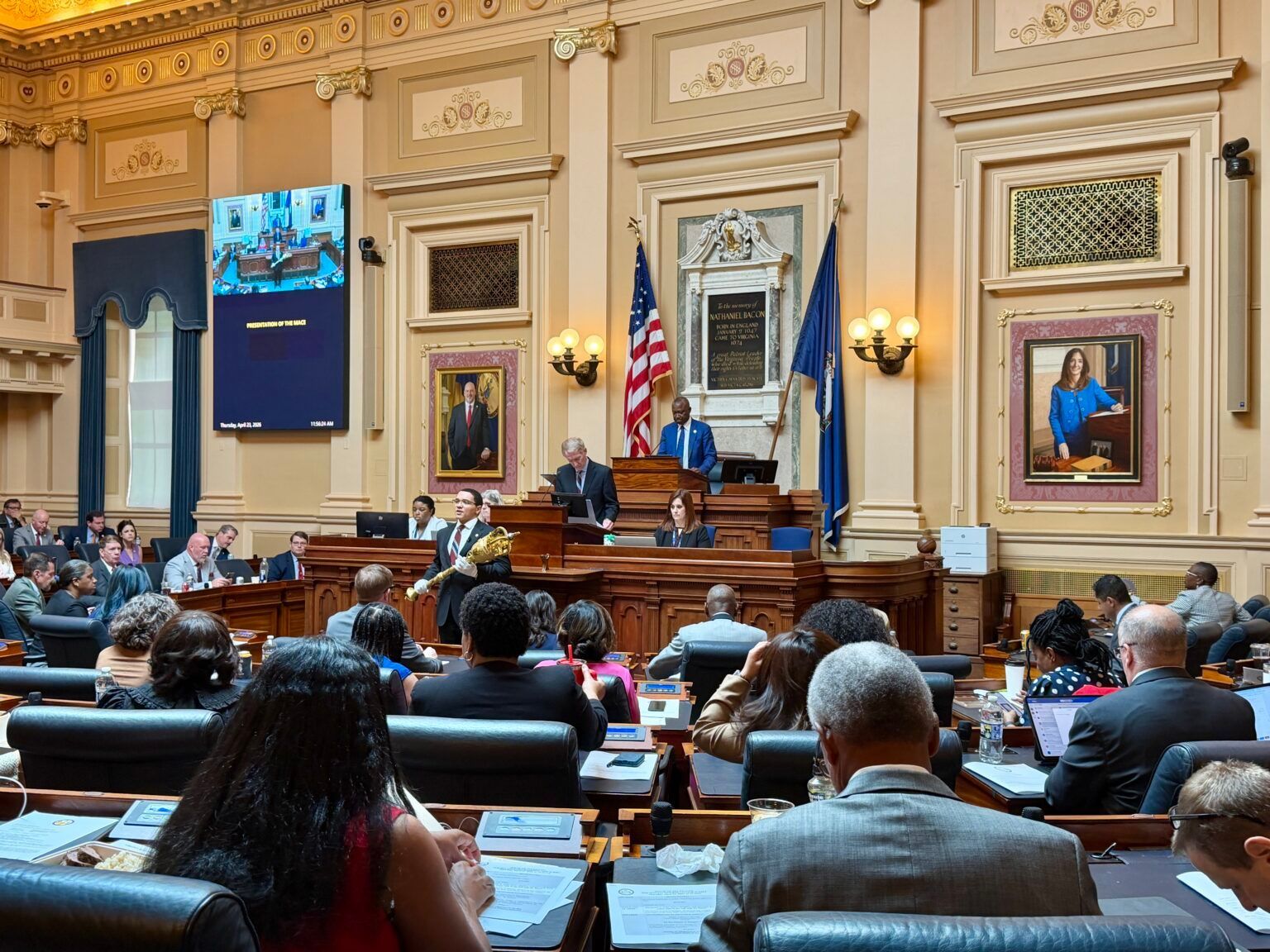
Members of the General Assembly will be meeting in Richmond starting Monday, Aug. 2 after Governor Ralph Northam called in June for a special session. The purpose of the special session is limited in scope; members will be tasked with allocating over $4.3 billion granted to the state via the American Rescue Plan and filling judicial vacancies. Signed into law by President Joe Biden this past March, the American Rescue Plan is a $1.9 trillion economic stimulus package designed to support economic recovery in light of the COVID-19 pandemic. The plan allocates $350 billion in funding for state, local, territorial and Tribal governments.


The federal allocations come at a time when Virginia seems to be making great economic strides. The state is currently running a nearly $2 billion revenue surplus, maintaining a low unemployment rate, and was recently once again ranked as the top state in the country to do business. These favorable economic indicators give the General Assembly room to use the federal funds to invest in a number of proposals that will directly impact the lives of Virginians in positive ways.


Of the $4.3 billion in funding Virginia has received, the state has already distributed $304.5 million in funds to certain localities. That’s in addition to the $2.3 billion Virginia localities already received directly from the federal government through the American Rescue Plan. 


One of the proposals the General Assembly will be considering during the upcoming special session seeks to invest $500 million to improve ventilation and air quality in public schools. Under the proposal, the state will allocate $250 million for these upgrades, which is to be matched by localities using funds already distributed. Ventilation upgrades will help to mitigate the threat of airborne illnesses like COVID-19 in schools, which is important considering a law passed earlier this year mandates that all school divisions make in-person learning available during the upcoming school year. 


The General Assembly will also be considering a proposal to allocate $411.5 million in American Rescue Plan funds to reduce water pollution, expand access to clean water, and develop infrastructure to prepare for storm water. A portion of these funds will be used for sewer overflow projects in Richmond, Alexandria, and Lynchburg, three localities that frequently see sewer flooding during and after rain. Clean water is vital not only for health reasons, but also for economic reasons; clean water is necessary for agriculture, and clean water used for outdoor recreation can help boost Virginia’s tourism industry. 


The newly established Virginia Food Access Investment Fund could see its first round of funding through another American Rescue Plan funding proposal. The VFAIF, approved by the General Assembly in 2020, invests in new and expanding food retailers operating in communities that lack reliable access to food. If approved, the proposal would distribute $620,000 to food security projects across the state.


Other priorities the General Assembly will be considering during the special session include expanding access to broadband, providing economic support to essential workers, and addressing economic needs of households and small businesses impacted by the COVID-19 pandemic.


The public can keep up with the special session by tracking meetings and tuning into live-streamed videos of the proceedings, which are available through Virginia’s Legislative Information System. LIS also allows for users to read through the text of legislation and track the progress of individual bills as they progress through the session.

By VOW Ops January 21, 2026
The second year of results from Virginia’s recently established Quality Establishment and Improvement System (VQB5) for early childhood education found that 99% of childcare providers receiving state funding meet or exceed quality expectations. As of early December 2025, over 154,000 views have been recorded on the system’s website since its October 2024 debut, revealing the many parents and families who appreciate the information that VQB5 offers them. None of these wonderful results would even be available to admire without the support and success we had in passing HB 1012 and SB 578 back in 2020! The data focuses on classroom interactions between children and caregivers and notes how said interactions encourage kids to express themselves at a young age. The state has also enacted categories of excellence for providers who score in the top 10%, exceed quality expectations, or even show significant improvement from an evaluation the year before. On top of that, a new data system called VAConnects helps integrate information on students over the years to track their learning progress. The Department of Education wishes to sustain the program and has requested $735,000 to do so. Overall, Virginia is serving as a model for other states to use in establishing best practices for their early childhood programs. Read more here .
By VOW Ops January 21, 2026
An August survey reveals that large majorities of Virginians want state lawmakers to address the rising cost of housing. The survey was conducted by Housing Opportunities Made Equal of Virginia and Freedom Virginia. More than 8 in 10 Virginians said the General Assembly needs to act. More than 3 in 4 Virginians want lawmakers to prevent landlords from raising rents each year by more than 7%. Many Virginians also supported the idea of the state incentivizing localities to build more housing and providing developers with an ability to appeal rejected housing projects. Many proposals that were made to address all these public concerns were struck down during the 2025 legislative session. One of the main reasons why all the mentioned proposals failed to pass the General Assembly is because of the large influence the local government lobbies have in Richmond in protecting what little authority they are granted by the state. However, 6 in 10 Virginians indicated that they are more concerned with providing more housing than protecting local government authority. Read more here.
By VOW Ops December 19, 2025
Governor-elect Spanberger has released details on how her administration will work with the General Assembly to address affordability issues for Virginians regarding health care, energy, and housing. Democrats in the General Assembly argue the proposals are needed to mitigate the effects of President Trump’s tariff policies and reduction of the Affordable Care Act (ACA) subsidies. Some of the solutions being proposed are legislation from the previous session that were vetoed by Republican Governor Glenn Youngkin. In health care, Spanberger and Virginia Democrats will tackle pharmacy benefit managers’ ability to compel patients toward using affiliated-only pharmacies. The incoming administration also wants to limit the number of times insurance companies can request approvals from patients receiving certain cancer cares and medicines for chronic conditions. Democrats are also reviving legislation that would prohibit insurance companies from charging tobacco smokers higher premiums. Further, Spanberger supports implementing a pilot program to help Virginians who will face unaffordable insurance premiums resulting from the expiration of the ACA enhanced tax credits. In energy, Spanberger called to make it easier for Virginians to utilize small-scale solar panels which don’t require hard labor to install. She also wants the previously vetoed legislation that would set energy storage standards for utility companies brought back to her desk (Governor Youngkin vetoed it because of his belief that the Virginia Clean Economy Act associated with it was ineffective). In housing, Spanberger and Democrats are reviving legislation from 2025 that would extend the grace period tenants have before being evicted for missing rent payments. They are also proposing changes that would give local governments priority in acquiring affordable multi-family units supported by tax credits when the owner wants to sell or convert them. Further, Democrats are reintroducing a bill which would allow all localities to change their zoning ordinances to create dense and affordable housing (currently, only the counties of Albemarle and Loudoun and the cities of Alexandria, Charlottesville, and Fairfax are granted such provisions). Read more here.
Show More